
Introduction
If you’ve ever been so deep in a game that you lost track of time, you’re not alone. Gaming can be intensely immersive — that’s part of what makes it great. But at what point does “I love gaming” turn into “I can’t stop playing”?
The line between gaming passion and addiction is thin — and sometimes blurry. Understanding that line is key to keeping gaming a fun and healthy part of life.
When Passion Becomes Problematic
Passion fuels dedication. It’s what drives speedrunners to perfect every frame and competitive players to train for tournaments. Passion is positive — it’s motivation and mastery in action.
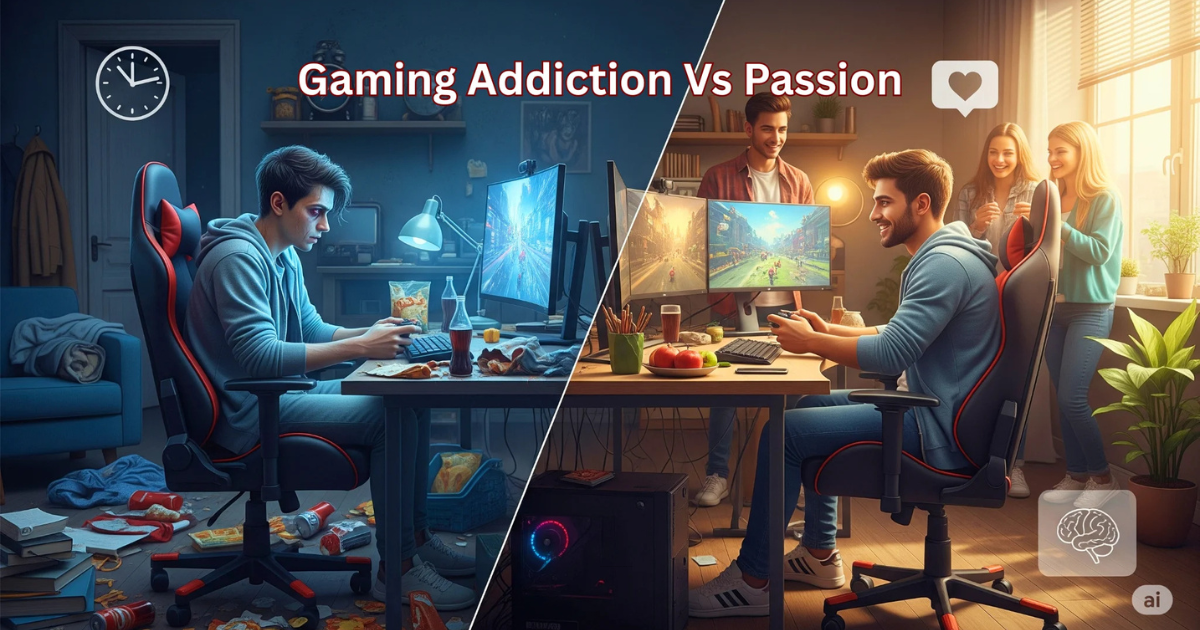
Addiction, however, removes balance. It’s when playing stops being a choice and starts being a compulsion. If you’re skipping meals, losing sleep, or neglecting relationships just to keep playing, that’s a red flag.
The key difference? Control. Passion means you play because you want to. Addiction means you play because you have to.
The Psychology of Play
Games are designed to feel rewarding. Level-ups, achievements, and loot drops all trigger dopamine — the brain’s “feel-good” chemical. That’s not inherently bad; it’s what makes games engaging.
But the same reward loops can become traps. When your brain starts chasing that next win or drop like a high, the fun can fade into obsession.
Think of it like fast food — delicious in moderation, unhealthy in excess.
Why Gaming Can Hook Us
Modern games are masters of retention. Daily log-in rewards, time-limited events, and social pressure from friends keep players coming back. MMORPGs, mobile games, and online shooters use these systems to maintain engagement.
Developers don’t necessarily aim to create addiction, but they do design for habit — and sometimes the two overlap.
Recognizing the Signs
Here are some signs you might be crossing the line:
-
You feel anxious or irritable when you can’t play.
-
You neglect school, work, or relationships for gaming.
-
You lie about how much time you spend playing.
-
You’ve lost interest in activities that used to excite you.
If any of those sound familiar, it might be time to reassess your habits.
Finding Healthy Balance
Gaming should enhance your life, not consume it. Setting limits can help:
-
Use timers or alarms to track play sessions.
-
Take regular breaks every hour.
-
Balance gaming with exercise or social activities.
-
Try playing with friends in real life to keep it social.
Remember — moderation isn’t restriction. It’s control.
The Positive Side of Gaming
It’s worth saying: gaming isn’t inherently bad. In fact, it can boost problem-solving, teamwork, and creativity. Studies show moderate gaming can even relieve stress and improve cognitive flexibility.
The goal isn’t to stop gaming — it’s to game smart.
Conclusion
Passion drives great gamers. Addiction traps them. Knowing the difference is the key to keeping gaming fun, fulfilling, and sustainable. Love your games — just don’t let them control you.